
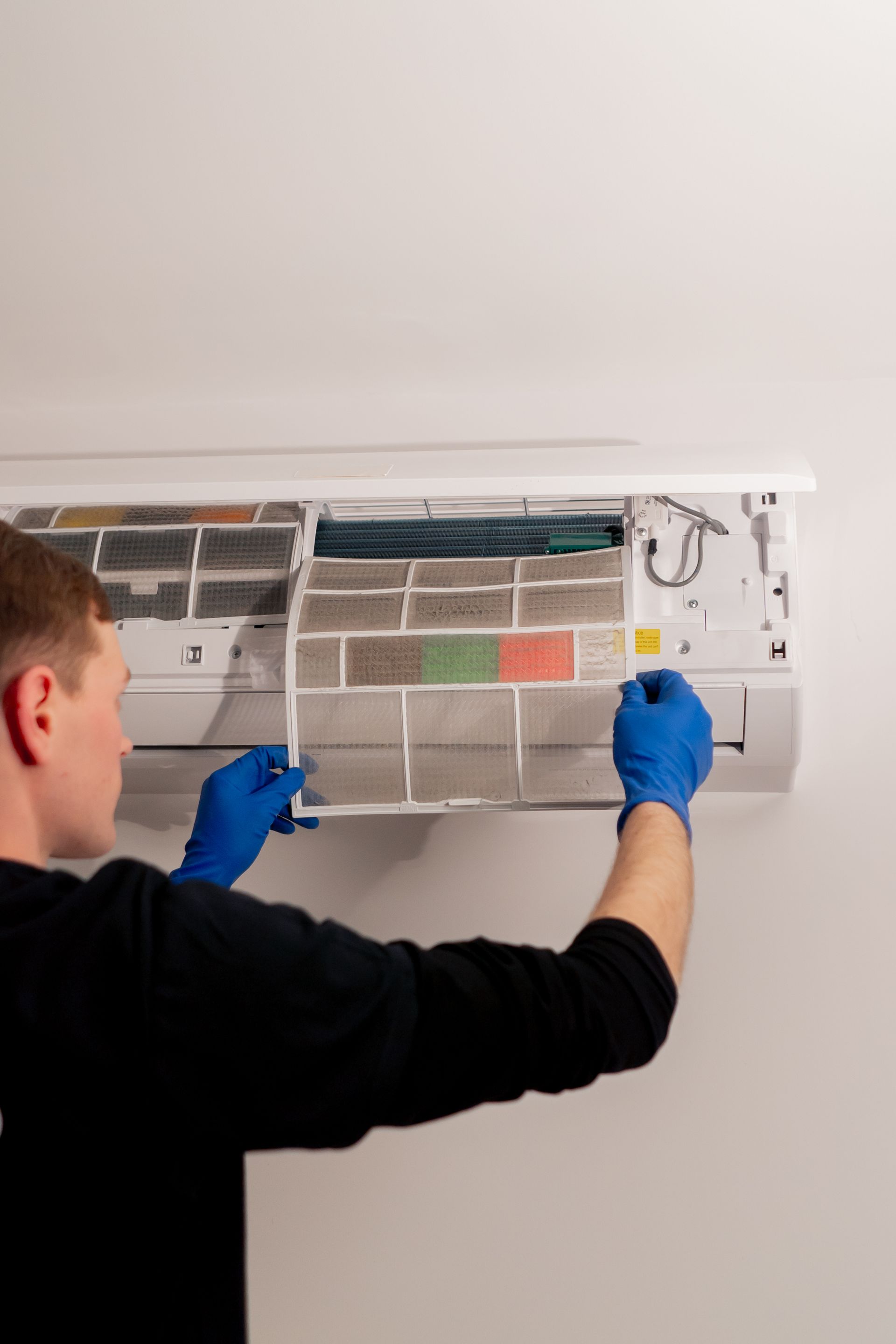
Indoor Air Quality Solutions for Northwest Suburbs Homes
The air inside your home can be more polluted than the air outside — and in Illinois, where winters seal houses tight for months at a time, what's circulating through your HVAC system matters.
Mini-Splits Heat and Cool — Year-Round
This is the part most homeowners don't realize until they're already researching: ductless mini-splits are heat pumps. They provide both heating and cooling from a single system, which means you're not just solving a summer problem — you're getting year-round comfort from one installation.
For additions, bonus rooms, and spaces that currently have neither heating nor cooling, that's a significant value. One system, one installation, one solution.
What's Actually in Your Home's Air
Most homeowners don't think about indoor air quality until someone in the house is sneezing constantly, skin is dry all winter, or there's a smell that HVAC service alone doesn't fix. These are the most common IAQ problems we see in northwest suburbs homes:
- Dry air in winter. Forced-air heating pulls moisture out of the air. By January in Schaumburg or Streamwood, most homes are running 20–30% relative humidity — well below the 35–50% range that's comfortable and healthy. The result: dry skin, irritated sinuses, static electricity, cracking wood floors and furniture.
- Dust and particulate buildup. Standard HVAC filters catch large particles but allow fine dust, dander, and particulates to recirculate. Homes with pets, older ductwork, or high foot traffic accumulate airborne particles faster than filtration keeps up.
- Mold spores and bacteria. Illinois summers bring humidity that can encourage mold growth in ductwork and on cooling coils. Once present, spores circulate every time the system runs.
- Pet dander and allergens. Dander is small enough to stay airborne and pass through standard filters. For households with allergy or asthma sufferers, it's one of the most persistent IAQ problems.
- Lingering odors. Cooking, pets, and VOCs from household products get picked up by the HVAC system and distributed through the house. Standard filtration doesn't address odors at the source.
Whole-Home IAQ Solutions That Work With Your HVAC System
JDT installs three categories of IAQ solutions, each targeting a different problem. As an owner-operated business, we assess your situation before recommending products — the goal is solving the actual issue, not selling every option on the list.
Whole-Home Humidifiers
A humidifier installed directly on your furnace maintains consistent humidity levels throughout the house during heating season — no refilling portable units, no manually adjusting settings. Set it and let the system handle it. The difference in comfort from October through March is immediate and consistent.
UV Air Purifiers
UV-C light systems installed at the air handler kill bacteria, viruses, mold spores, and other biological contaminants before they circulate through the ductwork. This is the same ultraviolet technology used in medical and commercial air treatment — applied at the HVAC system level so it's treating all the air moving through your home.
Advanced Air Cleaners and Electronic Filtration
High-efficiency and electronic air cleaners capture particles that standard 1-inch filters allow to pass — including fine dust, pet dander, pollen, and smoke particles. For households with allergy or asthma sufferers, upgrading filtration at the system level is one of the highest-impact changes you can make.
Who Benefits Most from IAQ Upgrades
IAQ solutions aren't only for households with obvious problems. These are the situations where a whole-home upgrade makes the most meaningful difference:
- Households with one or more allergy or asthma sufferers
- Homes with dogs or cats — especially multiple pets
- Families with young children or elderly residents who spend significant time indoors
- Anyone who notices excessive dust settling within days of cleaning
- Homeowners with dry skin, frequent static electricity, or nosebleeds during winter months
- Homes that feel stuffy or have persistent odors despite regular cleaning
- Anyone who replaced their HVAC system but still notices air quality issues
If your home checks more than one of these boxes, the problem is almost certainly in the air — and the HVAC system is the right place to solve it.
Why Illinois Winters Make IAQ Worse
From November through March, northwest suburbs homes are sealed against the cold with the furnace running continuously. That combination does two things to indoor air quality: it strips humidity from the air faster than occupants and activities can restore it, and it recirculates whatever is in the air — dust, dander, bacteria, mold spores — through the ductwork on every heating cycle.
Summer brings the opposite problem. Illinois humidity encourages mold and bacterial growth on cooling coils and in ductwork, particularly in homes where the AC system runs hard from June through August. Without a UV purifier or advanced filtration, what grows on those surfaces gets distributed through the house when the system cycles.
Seasonal IAQ problems in this region are predictable. The solutions are straightforward. JDT installs and services all three product categories in Bartlett, Elgin, Hanover Park, Hoffman Estates, and surrounding northwest suburbs communities.
IAQ Questions from Northwest Suburbs Homeowners
How do I improve the air quality in my home?
The most effective improvements are made at the HVAC system level — where all the air in your home already passes through. A whole-home humidifier addresses dry air in winter. A UV air purifier kills biological contaminants like mold spores and bacteria. An advanced air cleaner captures fine particles that standard filters miss. Most homeowners need one or two of these, not all three — call JDT and we'll help you identify which problem you're actually solving.
What causes poor indoor air quality?
In northwest suburbs homes, the most common causes are low humidity from forced-air heating in winter, inadequate filtration allowing fine dust and dander to recirculate, mold or bacterial growth on HVAC coils and in ductwork, and seasonal allergen buildup. Tightly sealed homes amplify all of these — the air has fewer opportunities to exchange and refresh.
What indoor air quality solutions are available for allergy sufferers near Schaumburg?
The most effective combination for allergy sufferers is an advanced air cleaner or high-efficiency filter to capture particulates and dander, paired with a UV purifier to address biological triggers. JDT installs both and can assess which configuration makes the most sense for your home and system.
Are whole-home IAQ products worth the investment?
For households with allergy or asthma sufferers, or any home where air quality is causing noticeable symptoms, yes — whole-home solutions are meaningfully more effective than portable devices and require far less ongoing maintenance. For homes without specific complaints, a humidifier alone often makes the biggest seasonal difference for comfort.
Do IAQ upgrades work with any HVAC system?
Most whole-home IAQ products are compatible with standard forced-air systems. Joel will confirm compatibility during the assessment before recommending or quoting anything.
Concerned about what your family is breathing? Call JDT for indoor air quality solutions in Schaumburg, Streamwood, and across the northwest suburbs — whole-home systems installed through your existing HVAC by a small, owner-operated company that prices honestly and recommends only what you actually need.